Radon, Mold, and Sewer Scopes: Are Add-On Inspections Worth It?
When you’re buying a home, the costs add up quickly. There’s the inspection, appraisal, closing costs, moving expenses, repairs, and everything else that comes with getting into a new house. So when buyers see optional add-on inspections like radon testing, airborne mold testing, or a sewer scope, the natural question is: Do I really need these, or is this just extra money? The honest answer is: it depends.
Everyone has a budget, and we understand that. A general home inspection covers most of the major visible risks in a home. But these additional services can reduce your risk even further. In some cases, they can save you thousands of dollars. In other cases, they simply give you peace of mind before making one of the biggest purchases of your life. Below is our practical take on each one.
Sewer Scope: The One We Recommend Most Often
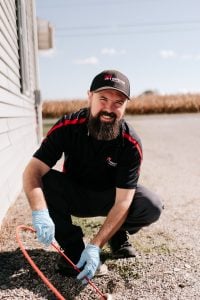
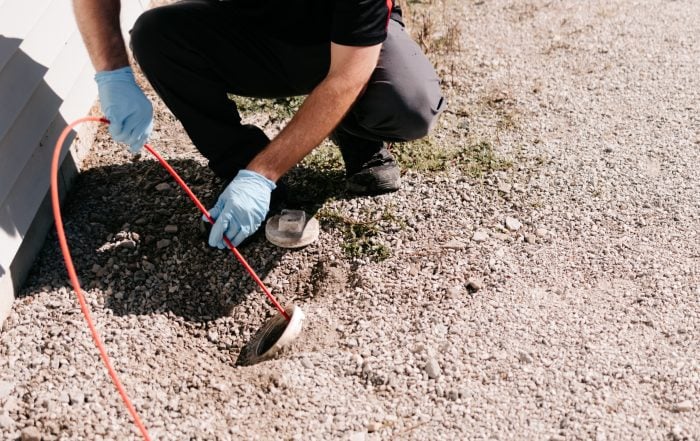
If there is one add-on inspection we would call the closest thing to a no-brainer, it is the sewer scope. This is especially true if the home is 20 to 30 years old or older. Most buyers do not realize that the sewer line running from the house to the city connection is not fully evaluated during a standard home inspection. We can run water, flush toilets, and look for visible concerns, but we cannot see the condition of the underground line without a camera. And sewer lines live a hard life.
Over time, they can be affected by:
- Tree root intrusion
- Offsets or separated pipe sections
- Bellies, where waste and water collect in low spots
- Cracks
- Collapsed sections
The tricky part is that many sewer line problems are not complete blockages right away. Water may still flow through the line, but the issue slowly gets worse over time. By the time the homeowner realizes there is a real problem, the repair can be expensive. Sewer line repairs often involve excavating the yard and can easily cost $10,000 or more. A sewer scope puts a camera directly into the line so we can see what is going on before you buy the home. Our cost start at $260
When a Sewer Scope Makes the Most Sense
We recommend strongly considering a sewer scope if:
- The home is more than 30 years old
- There are large trees near the sewer line
- The home has older clay, cast iron, or Orangeburg-style sewer piping
- There have been past drain backups
- You simply want to reduce the risk of a major underground repair
When It May Not Be as Important
On a newer home, especially one with newer PVC sewer piping and no known concerns, the risk is generally lower. That does not mean a sewer issue is impossible. It just means the decision may come down more to budget and risk tolerance.
Quick Note on Septic Systems
A sewer scope is typically for homes connected to a public sewer system. If the home has a septic system, that is a different situation. In that case, you should be looking at a septic evaluation, not just a sewer scope.
Airborne Mold Testing: Smart for the Right Home
Mold is one of those topics that can make buyers nervous quickly. That is understandable. Mold has been made into a scary issue over the years, and most people are not sure what to do when it comes up during a home inspection. Here is the practical version: mold is everywhere, but elevated mold levels inside a home can be a concern. In our previous guidance, we have explained that if there is elevated mold in a home, there is usually a moisture issue that needs to be addressed, not just cleaned up. Airborne mold testing helps give buyers more information.
When we perform airborne mold testing, we take air samples from the home and compare them to an outside control sample. This helps determine whether the indoor air has elevated mold spore levels compared to the outdoor air. Our cost start at $355
When Mold Testing Makes the Most Sense
Airborne mold testing is a good idea when the home has:
- A finished basement
- Past water intrusion or flooding
- High humidity
- Signs of moisture
- A musty smell
- Areas where moisture could be hidden behind finished walls
Finished basements are a good example. A basement may look clean during the inspection, but if it had water intrusion years ago and was not dried out or repaired correctly, mold could be hidden behind finished walls. A visual inspection alone cannot always tell us that.
When Mold Testing May Not Be Worth It
If the home is brand new, clean, dry, and has no signs of water issues, mold testing can be harder to justify. But that does not mean the test is useless. We have been in incredibly clean homes that came back with elevated mold levels. There are indicators we look for, like moisture and humidity, but they are not always present. The only way to know is to test. So with mold testing, it often comes down to personal preference. Some buyers want to cross their T’s and dot their I’s. Others are comfortable skipping it unless the home gives them a reason to be concerned. Both approaches can be reasonable depending on the home and the buyer.
Radon Testing: A Good Idea in Ohio
Radon is another add-on inspection that is easy to overlook because you cannot see it, smell it, or taste it. But in Ohio, it deserves attention. Ohio is one of the top states in the country for radon levels. Many homes have elevated radon, and the homeowner usually has no idea until testing is performed. Radon is a naturally occurring radioactive gas that comes from the ground and can enter homes through the foundation, basement, crawlspace, or lower levels. Long-term exposure is a health concern, and elevated levels should be taken seriously.
Why Buying a Home Is a Good Time to Test
You can test for radon after you move in. The issue is that once you own the home, you have lost the ability to negotiate with the seller. During the inspection period, radon testing gives buyers useful information before closing. If the results come back elevated, the buyer may be able to negotiate a mitigation system, seller credit, or other repair agreement.
In the Cleveland, Sandusky, and Toledo areas, we commonly hear radon mitigation costs around $1,500. The exact cost can vary depending on the home, but that is a good general number for buyers to keep in mind. Our cost start at $190
What Erie Provides
We are licensed by the Ohio Department of Health to perform professional radon testing. Our tamper-resistant monitors record hourly readings throughout the 52-hour testing period. Once testing is complete, our inspector will retrieve the monitor, and results may be available within as little as one hour after pickup.
That matters because a proper radon test is not just about placing a device in the home. The quality of the equipment, the placement, and the ability to verify the test conditions all matter.
When Radon Testing Makes the Most Sense
For Ohio buyers, radon testing is usually a good idea if:
- The home has a basement
- The home has a crawlspace
- The home is built on a slab
- You are concerned about long-term indoor air quality
- You want the opportunity to negotiate before closing
In other words, most Ohio buyers should at least consider it.
How to Decide Which Add-On Inspections Are Worth It
Not every buyer has the same budget or the same risk tolerance. That is why we try not to make this more complicated than it needs to be. Here is a simple way to think about it:
Home Older Than 30 Years? Get the sewer scope.
This is the add-on we recommend most often because the repair costs can be so high and the issue is underground where we cannot see it during a standard inspection.
Finished Basement or Past Water Intrusion? Consider airborne mold testing.
This is especially helpful when there are finished walls, past flooding, moisture concerns, or anything that makes you wonder what could be hidden.
Concerned About Radon in Ohio? Get the radon test.
Ohio has a lot of radon. Buying the home is usually the best time to test because you still have options if the results come back elevated.
Are Add-On Inspections Always Necessary? No. That is important to say.
A general home inspection is still the main inspection. It covers the major visible systems and components of the home and helps buyers understand the overall condition of the property. We also know that buyers have budgets. Not everyone can or wants to add every possible test. The goal is not to scare buyers into ordering everything. The goal is to help buyers make a smart decision based on the specific home they are buying.
Some homes clearly justify extra testing. Others may not. And sometimes, a buyer simply wants the additional peace of mind. That is okay too.
The Bottom Line
All three of these services can be valuable, but they are not all equal in every situation.
Sewer scope is the one we recommend most often, especially on homes that are 20 to 30 years old or older. Underground sewer repairs can be very expensive, and a standard home inspection cannot fully evaluate that line.
Airborne mold testing is beneficial when the home has a finished basement, past water intrusion, moisture concerns, or when the buyer wants the most complete picture possible.
Radon testing is a good idea in Ohio because elevated levels are common, and testing during the purchase gives buyers the opportunity to negotiate before closing.
As with most things in a home inspection, it comes down to the home, the buyer, the budget, and the level of risk you are comfortable with. Our advice is simple: look at the house in front of you, understand the risks, and make the decision that gives you the most confidence moving forward.
Not sure which add-on inspections make sense for your home? Our team can help you weigh the age, condition, and specific risks of the property so you can make an informed decision without adding services you may not need.
Schedule your inspection online or call us at 800.434.6022.

About the Author
Taylor Radloff : General Manager
Taylor oversees finance, accounting, marketing, and company strategy at Erie Inspection Service. Before joining Erie, he worked as a Multinational Banker at J.P. Morgan and brings a strong background in business operations and financial management.

Contact Us
Contact us for your home inspection today!
 800-434-6022