
Buying a House with Ungrounded Outlets: What a Two-Wire Electrical System Actually Means
If you’re buying an older home and your home inspection report mentions two-wire wiring, ungrounded outlets, or two-prong receptacles, you may be wondering how big of a concern it really is. For some home buyers, and depending on how well the issue is explained by the home inspector, finding an ungrounded electrical system can raise a red flag. But it does not automatically mean the house is “unsafe” or that you should not buy the home.
Two-wire electrical systems were the standard in older homes, particularly those built before the 1950s. They are not as safe as the modern electrical systems you would typically find in a home built today, but they are also not unusual in older homes throughout Toledo, Sandusky, Cleveland, and other communities across northern Ohio. The important thing is understanding what the system is, what limitations come with it, and what options you have if you decide to improve it.
Read on below to understand:
- What “ungrounded” actually means
- What the ground wire does
- What limitations come with a two-wire system
- What you can do to improve it
- Whether you should eventually budget for an electrical upgrade
If you understand those things, you can make a much better decision about the house.
Quick Answer: What Does an Ungrounded Outlet Mean?
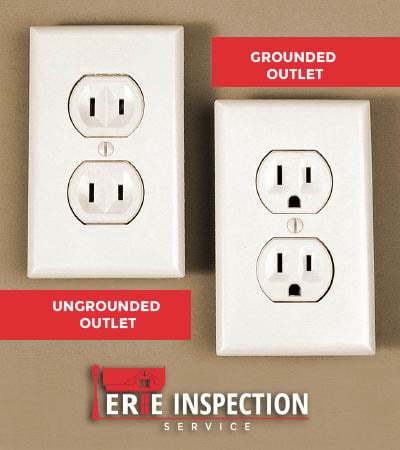
An ungrounded outlet is connected to an electrical circuit that does not have an equipment grounding conductor, commonly called a ground wire. Traditional two-wire electrical systems have a hot wire and a neutral wire. Modern wiring normally has those same two wires plus a third wire—the ground wire. That third wire gives electricity an easier path back through the electrical system when something goes wrong. It is primarily a safety feature.
What Does a Ground Wire Actually Do?
This is where we think a lot of the confusion comes from. Home buyers frequently hear, “The outlets aren’t grounded.” But unless someone explains what grounding actually accomplishes, that statement isn’t very helpful. In simple terms, a ground wire provides electricity with an intentionally easy path to travel during certain electrical faults.
Here’s a practical example: Imagine a metal appliance becomes energized. Let’s use a washing machine because most people can picture it easily. A washing machine has a metal cabinet around it. Under normal conditions, electricity stays inside the wires and electrical components where it belongs. But imagine something goes wrong inside the machine and a damaged electrical wire comes loose and makes contact with the metal cabinet. Now the metal cabinet can become energized.
Without a Ground Wire
If that washing machine is connected to an ungrounded two-wire circuit, there may not be an easy path for that fault current to travel. The washing machine could potentially remain energized. Then you walk into the laundry room and touch the machine. Your body can become part of the electrical path, and current can travel through you on its way back to the electrical source. That can result in electrical shock, serious injury, and in extreme circumstances, death. That is one of the practical safety concerns with an ungrounded electrical system.
With a Ground Wire
Now imagine the exact same electrical fault happens on a properly grounded system. The wire contacts the metal cabinet and energizes it, but this time the appliance is connected to a grounding conductor. The electricity suddenly has a very low-resistance path back through the grounding system. A large amount of fault current can flow very quickly, which should cause the breaker to trip and shut off the circuit. Instead of someone discovering the problem by touching an energized appliance, you may simply discover that the washing machine doesn’t have power. You still have an electrical problem that needs to be repaired, but the grounding system helped protect the person using the appliance. That is the practical value of a ground wire.
Does This Mean a House With Two-Wire Wiring Is Unsafe?
We would not describe it that way. We would say that it is less safe than a properly installed modern three-wire electrical system. That distinction matters. Two-wire wiring was normal for its time. If you’re buying an older home in Toledo, Sandusky, Cleveland, or many other communities throughout northern Ohio, finding portions of an older electrical system isn’t unusual. The house may have functioned this way for many decades. But electrical standards have improved because we now have better ways to protect people and our equipment. Grounding is one of those improvements.
Our advice is to understand the limitations, make appropriate safety improvements, and develop a long-term plan for the electrical system. We would not necessarily walk away from an otherwise good house simply because it has two-wire wiring.
Is Two-Wire Wiring Always Knob-and-Tube Wiring?
No. This is a common misconception. Knob-and-tube wiring is probably the type of two-wire system most home buyers recognize, but the two terms don’t mean exactly the same thing. There are other older wiring systems that may also lack an equipment ground. When knob-and-tube wiring is present, we generally explain it this way: “knob-and-tube wiring is the original electrical system in many older homes. While it is considered obsolete, there is not automatically a requirement that the entire system be removed simply because it exists.”
The bigger safety concerns we commonly see with knob-and-tube wiring relate to things such as:
- Improper modifications over the years
- Improper splices
- Covering the wire with insulation
- Deteriorated wiring insulation
We recommend having a qualified electrician evaluate the system for condition and safety.
Buyers should also talk with their insurance company before closing, because some insurance carriers may restrict coverage or charge more for homes with knob-and-tube wiring. But regardless of whether the system is knob-and-tube or another type of older two-wire wiring, the grounding limitation is basically the same: there is no dedicated equipment grounding conductor.
Can I Keep Using Two-Prong Outlets?
Yes. In many situations, the simplest option is to leave properly functioning two-prong receptacles in place. If an appliance only has a two-prong plug, it does not require the third grounding connection at the receptacle. Examples can include many lamps, phone chargers, small electronics, and double-insulated appliances. If the outlet is properly installed and otherwise safe, keeping a two-prong receptacle also communicates something useful to the homeowner: this circuit does not provide an equipment ground. The problem often starts when someone wants to plug a modern three-prong appliance into it.
Can I Replace a Two-Prong Outlet With a Three-Prong Outlet?
You should not simply remove a two-prong receptacle and install an ordinary three-prong receptacle if no ground is present. That can create a misleading condition because the receptacle looks like it is grounded. Your appliance plugs into it like a grounded outlet, but the grounding terminal may not actually be connected to anything. A homeowner can therefore assume they have protection that isn’t actually there. Fortunately, there is another option.
GFCI Protection Is One of the Best Upgrades for a Two-Wire System
If you need three-prong receptacles on an older ungrounded circuit, one practical improvement is the installation of GFCI protection. When properly installed for this application, the receptacle is labeled to indicate that there is “No Equipment Ground.” Depending on the installation, additional labeling may also be required for downstream GFCI-protected outlets. This is an accepted method under the National Electrical Code when installed correctly, and it provides meaningful additional protection.
How Does a GFCI Work Without a Ground?
A GFCI does not need a ground wire to perform its primary shock-protection function. Instead, it monitors the electricity traveling out on the hot wire and returning on the neutral wire. Under normal conditions, those amounts should essentially match. If some of that current starts traveling somewhere it shouldn’t—possibly through a person—the GFCI detects the imbalance and can shut the circuit off extremely quickly.
So if you become part of that electrical path, you could still receive a shock, but the GFCI is designed to interrupt the circuit rapidly and reduce the chance of a more serious injury. That’s why we consider GFCI protection one of the most practical improvements available in a house with older two-wire wiring.
But There Is an Important Limitation. A GFCI does not create a ground wire. The circuit is still ungrounded. You’re adding another layer of shock protection, which is valuable, but you have not converted the wiring into a modern grounded electrical system.
Do Surge Protectors Work on Ungrounded Outlets?
This is another issue we think home buyers should understand. Do not assume that plugging an expensive computer or television into a surge protector gives you the same protection it would have on a properly grounded electrical system. Many surge protection devices depend, at least in part, on the grounding system to divert excess voltage away from the equipment. Without a functional equipment ground, some surge-protection functions may not operate as intended.
That’s especially important when you’re trying to protect expensive or sensitive electronics such as:
- Computers
- Televisions
- Gaming systems
- Home-office equipment
- Audio equipment
- Other sensitive electronics
A power strip that says “surge protector” can therefore give homeowners a false sense of security when it is connected to an ungrounded circuit.
The exact performance depends on the surge protector and how it is designed, but the main takeaway is simple: you should not assume a surge protector provides its full intended protection on an ungrounded electrical system.
What Can You Do About Ungrounded Outlets?
You don’t necessarily need to rewire the entire house the day after you move in. There are several options, and the right choice depends on the condition of the wiring, how you intend to use the home, your budget, and your long-term plans.
Option 1: Keep Two-Prong Receptacles Where They Still Work for You
This is the simplest solution. If you have locations where you’re using appliances with two-prong plugs, leaving the two-prong receptacle may be perfectly practical. You understand the limitation, and the receptacle isn’t pretending to provide a ground that doesn’t exist.
Option 2: Add GFCI Protection Where You Need Three-Prong Outlets
For many homeowners, this is the most practical short-term safety improvement. A qualified electrician can determine the proper way to install GFCI protection and the required labeling. Just remember that a GFCI improves shock protection, but it does not provide an equipment ground.
Option 3: Add Grounding to Selected Circuits or Receptacles
Depending on the electrical system and construction of the home, an electrician may sometimes be able to add a grounding conductor to selected locations.
For example, maybe you particularly want properly grounded outlets for a home office, expensive electronics, certain kitchen equipment, a workshop, or specific appliances.
This can be more invasive than installing GFCI protection because additional wiring has to be run. But it may allow you to prioritize the areas where grounding matters most to you. A licensed electrician should determine whether and how this can be accomplished in your particular home.
Option 4: Upgrade the Electrical System Over Time
The best long-term solution is ultimately replacing obsolete wiring with a modern grounded electrical system. But that doesn’t mean every buyer needs to rewire the entire house immediately.
Depending on your budget, you may choose to upgrade:
- One room at a time
- During renovations
- Over the next five or ten years
For many buyers, that is a much more realistic approach.
Should You Buy a House With Ungrounded Outlets?
For us, ungrounded wiring by itself would not necessarily be a reason to walk away from a house. It is one factor in the overall condition of the property. Every older home is going to have something. If we were comparing an otherwise serviceable two-wire electrical system that could be improved over time with a badly deteriorated roof that needs immediate replacement, the electrical system may actually be the issue we’d rather deal with.
Why? Because in many situations, you can live with the limitations of the older electrical system while developing a plan to improve it. A failed roof may need immediate attention because water can start damaging everything underneath it. That doesn’t mean you should ignore electrical safety, and we’re certainly not minimizing the potential consequences of an electrical fault. It simply means that home-buying decisions need context.
Another buyer may feel completely differently. Someone with small children, substantial sensitive electronic equipment, different financial priorities, or simply a lower tolerance for an older electrical system may decide they want the wiring upgraded immediately. There’s nothing wrong with that either. The important part is knowing what you’re buying.
Our Advice to Home Buyers
If we find an older two-wire electrical system during a home inspection, our recommendation generally comes down to four things.
- Understand what the limitation means. The system does not provide the equipment grounding protection found in modern electrical wiring.
- Have questionable or obsolete wiring evaluated. This is especially important with knob-and-tube wiring, improperly modified systems, damaged wiring, or other visible concerns.
- Make reasonable safety improvements. GFCI protection can be an excellent upgrade where appropriate.
- Develop a long-term plan. You may decide to modernize portions of the electrical system over several years rather than tackling the entire house immediately.
If knob-and-tube wiring is present, we also recommend checking with your homeowners insurance carrier before purchasing the home.
The Bottom Line
An ungrounded electrical system is not as safe as the grounded electrical systems we install today. But that doesn’t automatically make an older house a bad house. The ground wire is essentially there for when something goes wrong. It gives fault current an intentionally easy path back through the electrical system so protective devices can shut the circuit down instead of allowing you or a member of your family to potentially become that path.
If you’re buying a home with two-wire wiring:
- Understand its limitations
- Don’t create fake grounds by simply installing ordinary three-prong receptacles
- Consider GFCI protection where appropriate
- Remember that surge protectors may not provide their full intended protection without a ground
- Talk with an electrician about areas where you may want true grounding
- Budget for modernization as your finances and priorities allow
Understand what you’re buying, form a plan, prioritize the important items, and welcome to homeownership!

About the Author
Taylor Radloff : General Manager
Taylor oversees finance, accounting, marketing, and company strategy at Erie Inspection Service. Before joining Erie, he worked as a Multinational Banker at J.P. Morgan and brings a strong background in business operations and financial management.



Contact Us
Contact us for your home inspection today!
 800-434-6022