
Knob & Tube Wiring: What Home Buyers Should Know
Knob & tube wiring (often abbreviated K&T) is one of the most common electrical systems found in older homes throughout Toledo, Sandusky, Cleveland, and Northern Ohio. It is also one of the most misunderstood.
For home buyers, the presence of knob & tube wiring often raises questions about safety, insurance, and future electrical upgrades. While the system does have limitations, it’s important to approach it practically. Many homes with this wiring have been standing — and functioning — for 80, 100, or even 120+ years.
This guide explains what knob & tube wiring is, the most common concerns associated with it, how it is evaluated during a home inspection, and what buyers should consider if it is present.
A Brief History of Knob & Tube Wiring
Knob & tube wiring was the first widely used electrical wiring system in residential homes, dating back to the late 1800s.
It remained common through the 1930s, and in some parts of Northern Ohio it was installed into the 1940s and early 1950s.
At the time, homes had minimal electrical demand — typically lighting and a few small appliances. The system was never designed to support modern electrical usage such as air conditioning, large kitchen appliances, home offices, and modern electronics.
What Is Knob & Tube Wiring?
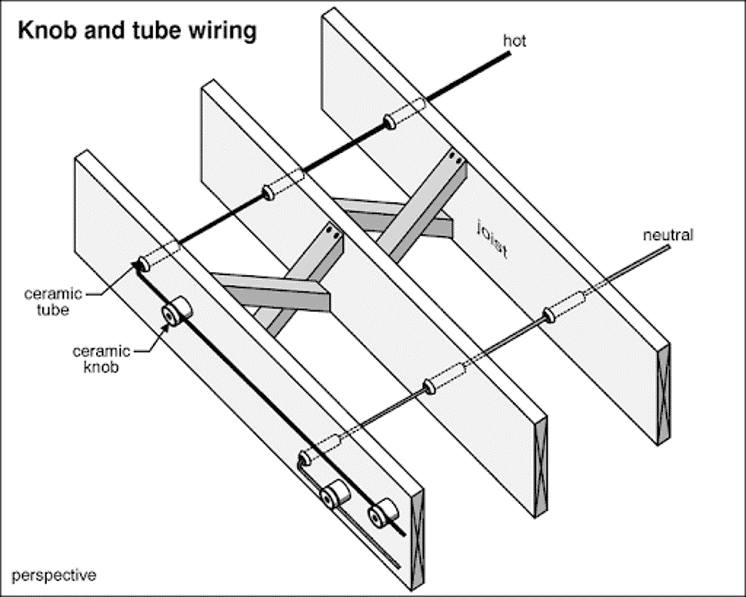
Knob & tube wiring consists of three main components:
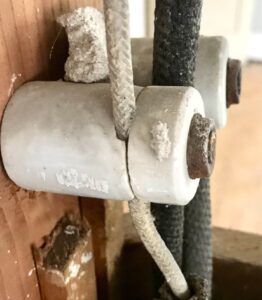
- Porcelain knobs that support and suspend electrical wires
- Porcelain tubes that protect wires as they pass through wood framing
- Copper wires wrapped in cloth or rubber insulation
The porcelain pieces do not carry electricity. Their purpose is simply to keep wires separated from wood framing and allow air circulation.
Why It Was Designed This Way
Knob & tube wiring is an open-air electrical system. The wires are spaced apart so heat can dissipate into the surrounding air.
When this system was installed, homes typically had little or no insulation. While the design worked well for early construction methods, it can create conflicts when combined with modern insulation and higher electrical demand.
Four Common Issues With Knob & Tube Wiring
1. Aging Insulation
Even the newest knob & tube wiring systems are 70+ years old, and many are more than a century old.
Over time:
- Cloth or rubber insulation deteriorates
- Insulation becomes brittle and flakes away
- Copper conductors may become exposed
The copper wiring itself can last a long time, but deteriorated insulation is one of the most common concerns inspectors encounter.
2. No Ground Wire
Knob & tube wiring is a two-wire system consisting of:
- Hot
- Neutral
- No equipment grounding conductor
Modern electrical systems include a ground wire that safely carries stray electrical current and helps reduce shock and fire risks.
Without grounding:
- Three-prong outlets may not actually be grounded, creating a potential shock hazard
- Surge protection is limited
- Electronics can be more vulnerable
- Faults may not trip breakers as effectively, increasing safety concerns
- Some electrical upgrades become more complicated
Adding proper grounding usually requires partial or full rewiring.
3. Conflicts With Modern Insulation
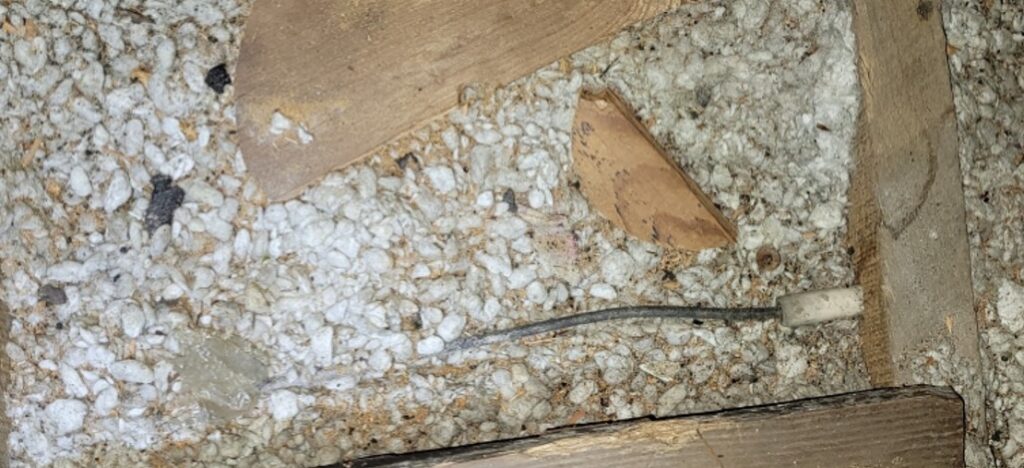
Because knob & tube wiring relies on surrounding air to dissipate heat, it should not be covered by insulation.
When attic insulation is installed over active knob & tube wiring, heat can become trapped around the wires and potentially create a fire hazard.
This condition is frequently discovered during home inspections in older Toledo, Sandusky, and Cleveland homes that have been retrofitted for energy efficiency.
4. Improper Modifications
Most homes with knob & tube wiring have been modified over the decades.
Common issues include:
- Improper splicing to modern wiring
- Connections made outside electrical junction boxes
- DIY electrical work
- Circuits overloaded beyond original design
In many cases, the modifications — not the original wiring — are where safety concerns arise.
Insurance and Knob & Tube Wiring
Insurance coverage is often the largest concern for buyers purchasing a home with knob & tube wiring.
Some insurance companies:
- Will insure homes with knob & tube wiring
- Require electrical upgrades first
- Charge higher premiums
- Decline coverage altogether
In Northern Ohio, buyers sometimes need to work with an insurance broker to locate a carrier willing to insure a home with active knob & tube wiring.
Coverage should always be confirmed before closing on the home.
How Knob & Tube Wiring Is Evaluated During a Home Inspection
During a professional home inspection, knob & tube wiring is evaluated through a visual, non-invasive inspection.
Inspectors typically:
- Examine visible wiring in basements, attics, crawlspaces, and accessible areas
- Do not open walls or ceilings
- Do not remove insulation
When knob & tube wiring is identified, a voltage detector is often used to determine whether the wiring is energized.
In many homes:
- The wiring has been abandoned
- New wiring has replaced it
- Old knob & tube remains but is no longer active
Inactive knob & tube wiring is generally not considered a safety concern, though it is still documented in the inspection report.
If the wiring is active, further evaluation by a licensed electrician is recommended.
Is Knob & Tube Wiring Dangerous?
Knob & tube wiring is not automatically dangerous simply because it exists.
However, risks increase when:
- Insulation has deteriorated
- Wiring is buried beneath insulation
- Improper modifications are present
- Electrical demand exceeds the original design
- Grounding is absent
Most electricians agree it is an outdated electrical system that should eventually be upgraded, even if it has functioned for many years.
Buying a House With Knob & Tube Wiring: What You Should Do
1. Confirm Insurance Early
Speak with your insurance agent early in the process to understand:
- Coverage availability
- Premium differences
- Upgrade requirements
2. Have an Electrician Evaluate the System
A licensed electrician can determine:
- How much knob & tube wiring remains
- Whether unsafe modifications exist
- Whether insulation conflicts are present
- What upgrade options are available
3. Budget for Electrical Upgrades
In Northern Ohio, full rewiring projects often range from approximately:
$7,500 – $20,000+
Costs vary depending on:
- Home size
- Accessibility of wiring
- Plaster vs. drywall walls
- Finished basements or attics
- Electrical panel upgrades
Obtaining multiple written estimates is recommended.
4. Avoid DIY Electrical Work
If knob & tube wiring remains active:
- Do not bury it in insulation
- Avoid overloading circuits
- Do not make unpermitted modifications
Electrical work should always be performed by a licensed electrician.
The Bottom Line
Knob & tube wiring reflects a different era of home construction. While it is not automatically unsafe, it does come with limitations.
- No grounding
- Open-air design
- Aging insulation
- Possible insurance challenges
If you are buying an older home in Toledo, Sandusky, Cleveland, or elsewhere in Northern Ohio, knob & tube wiring alone should not automatically eliminate the property from consideration. However, it should factor into your budget, planning, and long-term expectations.
Electrical systems can be upgraded. The character of older homes often cannot.
If you’re buying an older home in Toledo, Sandusky, Cleveland, or anywhere in Northern Ohio, our inspectors routinely evaluate older electrical systems including knob & tube wiring during the home inspection.
Frequently Asked Questions About Knob & Tube Wiring
Is knob and tube wiring safe?
Knob and tube wiring is not automatically unsafe simply because it exists. Many homes have operated with knob and tube wiring for decades. However, risks increase when insulation deteriorates, wiring has been improperly modified, circuits are overloaded, or the wiring has been covered by insulation. Any active knob and tube wiring should be evaluated by a licensed electrician.
Does knob and tube wiring need to be replaced?
Not always, but replacement of knob and tube wiring is typically recommended over time. While knob and tube wiring may still function, it does not meet modern electrical standards, lacks a grounding conductor, and was not designed for today’s electrical demands. Many homeowners choose to replace knob and tube wiring either after purchasing the home or gradually in phases.
Can you insure a house with knob and tube wiring?
Some insurance companies will insure homes with knob and tube wiring, while others may decline coverage, require electrical upgrades, or charge higher premiums. In Northern Ohio, buyers sometimes need to work with an insurance broker to find carriers willing to insure homes with active knob and tube wiring. Insurance availability should always be confirmed before purchasing the home.
How much does it cost to replace knob and tube wiring?
The cost to replace knob and tube wiring varies widely depending on the size of the home, accessibility of wiring, and wall construction. In many Northern Ohio homes, full replacement of knob and tube wiring commonly ranges from approximately $7,500 to $20,000 or more. Plaster walls, finished basements, and electrical panel upgrades can significantly affect total costs. Before moving forward with the purchase, obtain estimates from a licensed electrician so you understand the scope and potential cost of the work.
Can knob and tube wiring be covered with insulation?
No. Knob and tube wiring was designed as an open-air electrical system that relies on surrounding air to dissipate heat. Covering knob and tube wiring with insulation can trap heat around the wires and increase the risk of overheating. If attic insulation is present around active knob and tube wiring, the system should be evaluated by a licensed electrician.
Does knob and tube wiring have a ground wire?
No. Knob and tube wiring is a two-wire system consisting of a hot wire and a neutral wire. It does not include an equipment grounding conductor. Because knob and tube wiring lacks a ground, many three-prong outlets in older homes may not actually be grounded, and surge protection for electronics may be limited.
Can GFCI outlets be installed on knob and tube wiring?
Yes. GFCI outlets can often be installed on circuits that use knob and tube wiring, even though the system does not include a ground wire. GFCI protection can reduce shock risk, but installing a GFCI does not add a true equipment ground to knob and tube wiring or provide the same level of protection for electronics.
Should I walk away from a house with knob and tube wiring?
Not necessarily. It is very common to find knob and tube wiring in older homes. The key is understanding the condition of the knob and tube wiring, confirming insurance availability, and budgeting for potential upgrades. Electrical systems can be improved over time, but the location and character of older homes are often difficult to replace.

Contact Us
Contact us for your home inspection today!
 800-434-6022