
When you picture home maintenance, you might think of big projects—like replacing a roof or upgrading a furnace. But one of the simplest things you can do to protect your home is also one of the most overlooked: keeping your gutters clear and making sure your downspouts have proper extensions.
During home inspections, we see clogged gutters and missing extensions more often than you’d think. The good news? These are quick, low-cost fixes that can help keep your home in great shape for years to come.
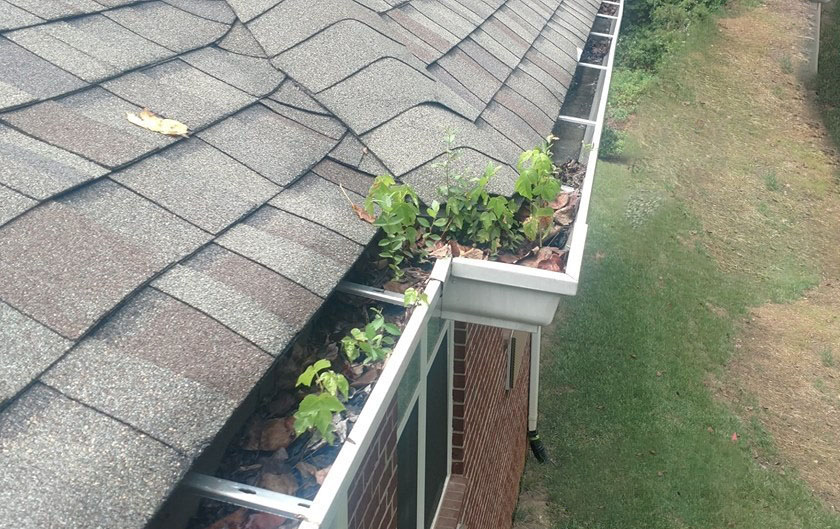
This a gutter so clogged with debris that plants are actually growing in it, a clear sign of neglect. Overflows like this can damage the fascia and siding above.
Why Gutters and Downspouts Matter
Gutters have one main job—direct rainwater away from your home. When they’re clogged with leaves and debris, water can overflow and spill down the sides of your house. Without a downspout extension, that water ends up right at your foundation, soaking into the soil and putting stress on your home’s structure.
Over time, this can lead to damp basements, mold growth, or erosion in your landscaping. But here’s the reassuring part—if you catch it early, it’s easy to prevent.
How Much Water Are We Talking About?
Here’s a simple way to calculate it for your own home:
- Measure your roof – Find the length and width of your roof in feet.
- Calculate the area – Multiply length × width for the total square footage.
- Check the rainfall – Look up how many inches fell during the storm.
- Apply the formula – Roof area × rainfall (in inches) × 0.623 = gallons collected.
For example, if that same 2,000-square-foot roof saw 2 inches of rain, the math would be: 2000 sq ft × 2 in × 0.623 = 2,492 gallons of water.
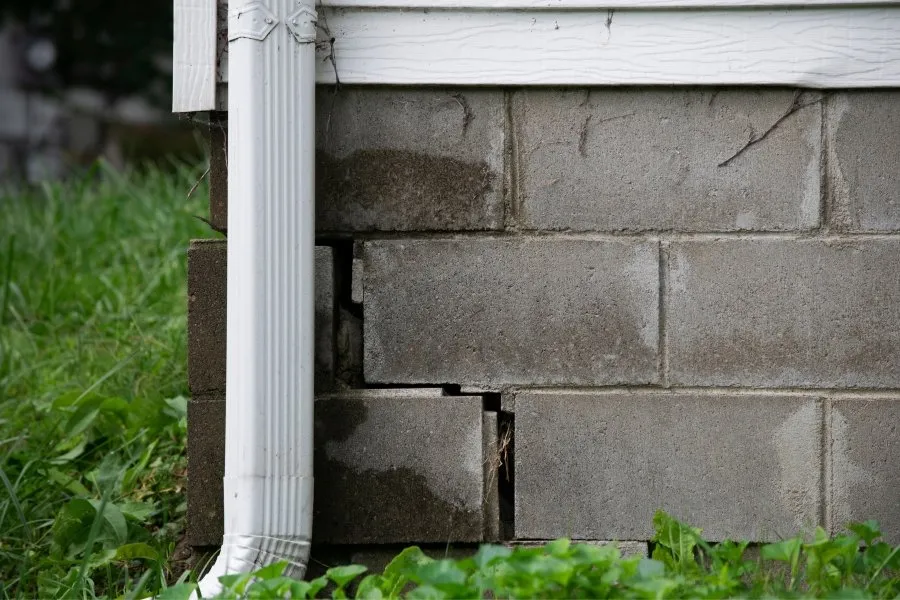
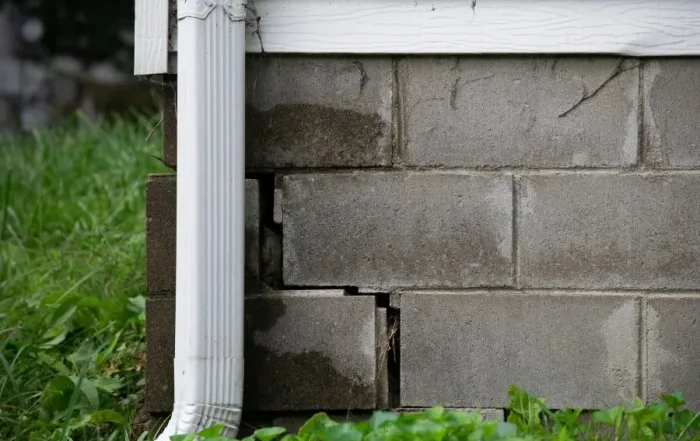
Home with foundation damage: cracked and shifted masonry often results from repeated water exposure pooling near the home’s base.
Simple Checks You Can Do Anytime
You don’t need special tools or a ladder to spot most gutter problems. Just take a quick walk around your home and look for:
- Signs of overflow – dirt streaks, algae, or mildew on siding under the gutters.
- Pooling water – puddles near the base of your home after rain.
- Sagging gutters – sections pulling away from the house or visibly full of debris.
- Short downspouts – extensions should carry water at least 4–6 feet away from your home.
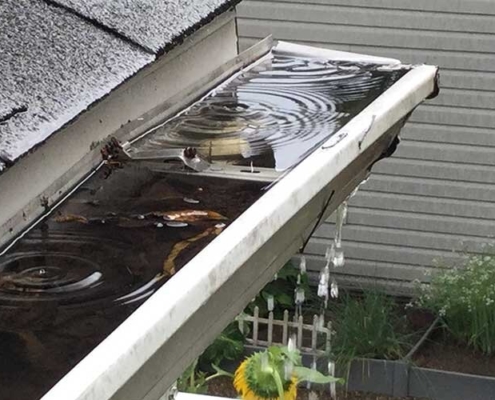
This home has standing water within a clogged gutter; this kind of blockage can lead to ice dams in colder months or persistent water damage during rain, plus possible insect breeding sites.
Easy, Budget-Friendly Fixes
- Clean your gutters – A quick sweep in the spring and fall usually does the trick. If you’re not comfortable working on a ladder, hiring a pro is still far cheaper than repairing water damage.
- Add or replace downspout extensions – Most cost less than $15 and take just minutes to install. Hinged styles fold up out of the way when you’re mowing the lawn.
- Consider gutter guards – They won’t make your gutters completely maintenance-free, but they can reduce how often you need to clean them.
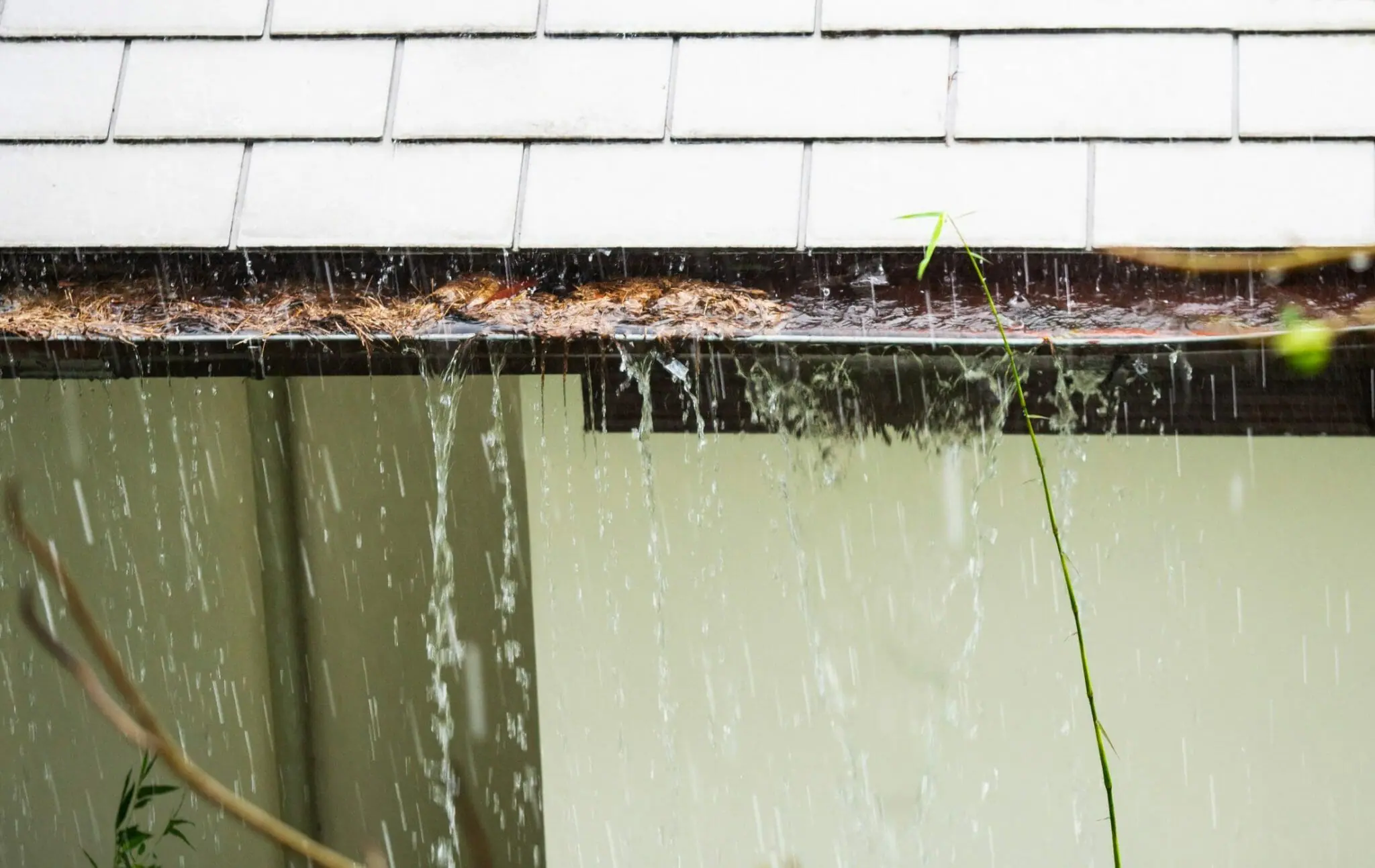
At this home, water is filtering over gutter edges in a steady stream—a visual warning that the system is overwhelmed and failing
Make It Part of Your Routine
We recommend checking your gutters:
- Spring – After winter storms, before spring showers.
- Fall – After most of the leaves have dropped.
- After big storms – Just a quick glance to make sure nothing’s blocked or damaged.
A Little Attention Goes a Long Way
Clogged gutters and short downspouts aren’t emergencies—they’re just small maintenance items that make a big difference over time. With a little attention now and then, you can avoid costly repairs, keep your home dry, and enjoy the peace of mind that comes with knowing you’ve got one more thing checked off your homeowner to-do list.


Contact Us
Contact us for your home inspection today!
 800-434-6022