
Electrical Safety: What Home Buyers Should Know – Grounding, GFCIs, AFCIs & Surge Protection Explained
Electrical safety gets confusing pretty quickly. GFCIs, AFCIs, ground wires, and surge protectors all provide some form of electrical protection, but they don’t protect against the same things. Some protect people, some primarily help prevent fires, and others are designed to protect electronics and equipment.
This comes up regularly during home inspections, especially when we’re inspecting older homes throughout Northern Ohio. Buyers see an outlet without a ground, hear that a circuit isn’t GFCI protected, or notice an older electrical panel without AFCI breakers and understandably wonder, “Is this dangerous, and should I be worried about buying the house?”
This answer requires a little more context. Rarely—unless you’re buying a newer home—are you going to find every modern electrical safety feature throughout the entire house. These protections were developed and adopted over time, and an older home wasn’t built with the same electrical safety standards we use today. So rather than treating every missing safety device as a reason to walk away from a house, it helps to understand what each one actually does.
Here’s the simple Comparison:
| Electrical Protection | What It Does | Primarily Protects |
| Ground Wire | Provides a safe path for stray electrical current | People and electrical systems |
| GFCI | Quickly shuts off power when it detects current going somewhere it shouldn’t | People from electrical shock |
| AFCI | Detects dangerous electrical arcing and shuts down the circuit | Homes and people from electrical fires |
| Surge Protection | Limits sudden voltage spikes and diverts excess energy | Electronics and appliances |
Now let’s look at each one in practical terms.
Ground Wires: Giving Electricity a Safer Path
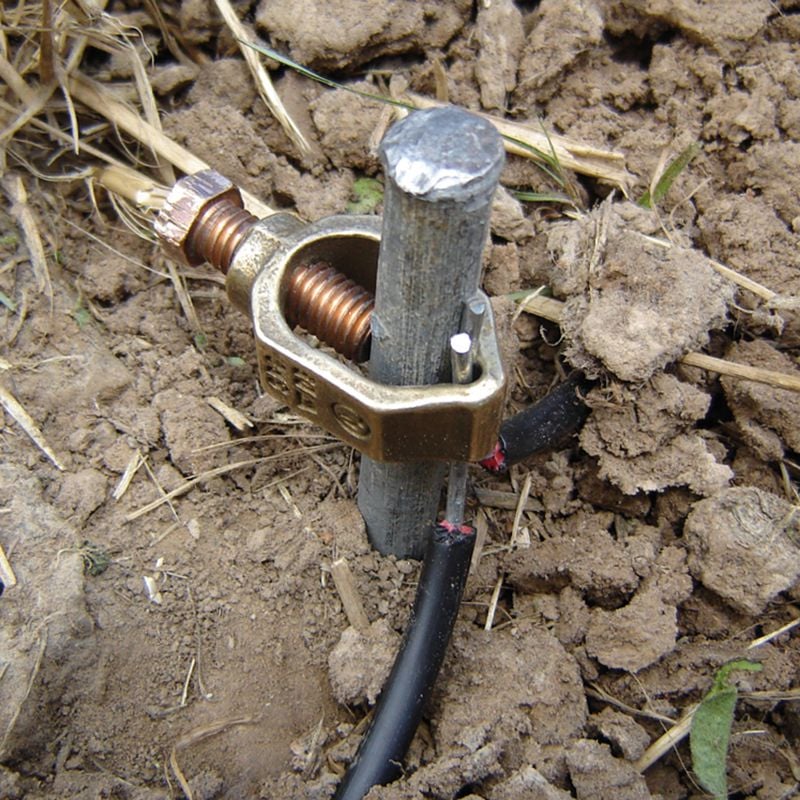 Grounding is probably the most confusing item on this list because it’s not simply one device you can point to. At its most basic level, a ground wire provides an easier, safer path for stray electrical current to take.
Consider your refrigerator. If an electrical wire inside the refrigerator comes loose and energizes the metal exterior, touching the refrigerator could potentially make you part of the path electricity takes. A properly grounded electrical system provides another, safer path for that electricity to take.
Grounding exists at several levels within the home’s electrical system, including grounding at the main electrical service and grounding conductors within individual circuits. This is also why older two-prong outlets and ungrounded wiring come up so frequently during inspections of older homes.
Does that automatically mean you shouldn’t buy the house? No, but it is something you should understand, particularly when deciding where electrical upgrades make sense. The simple takeaway is that grounding gives unwanted electrical current somewhere safer to go.
To learn more about ungrounded electrical systems and what they mean for home buyers, click here to read our complete guide.
GFCI: Protection Against Electrical Shock
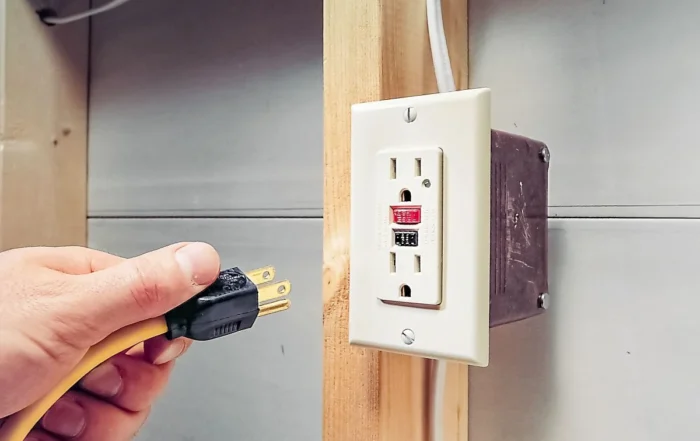
A Ground-Fault Circuit Interrupter, or GFCI, is primarily there to protect people from electrical shock and electrocution. You’ve probably seen GFCI outlets before. They’re the outlets with the little TEST and RESET buttons, commonly found in bathrooms, kitchens, garages, and exterior locations.
A GFCI monitors the electrical current traveling through a circuit. If it detects an imbalance—meaning some electricity may be taking an unintended path—it shuts off the power extremely quickly.
Here’s a practical example. Imagine you’re using an electrical appliance near water. Something goes wrong and electricity begins flowing through a person. Without GFCI protection, that shock could continue. A GFCI detects the imbalance and quickly cuts the power. The simple takeaway is that GFCIs protect people from electrical shock.
Where should you expect GFCI protection?
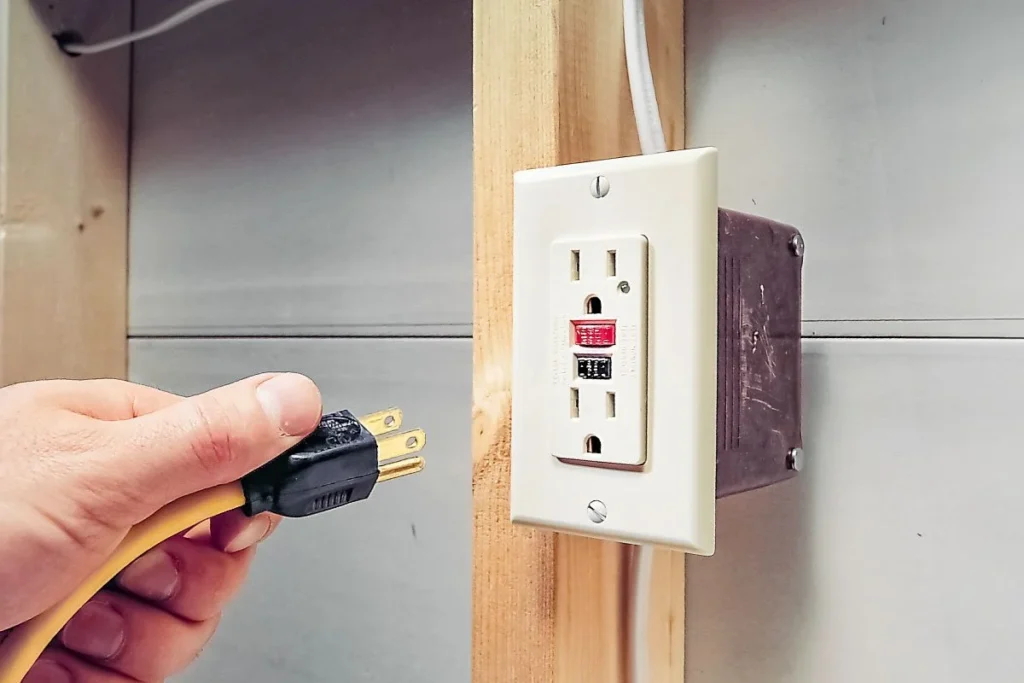 Think water and wet locations. Bathrooms, kitchens, garages, exterior outlets, basements, crawlspaces, and other locations where electricity and moisture may come together are common areas where you’ll find GFCI protection.
One important thing to remember is that GFCI protection can be provided by the receptacle itself or by a GFCI breaker in the electrical panel. Don’t assume an outlet isn’t protected simply because you don’t see TEST and RESET buttons on it. A single GFCI receptacle can also protect multiple downstream outlets when they are wired properly. We commonly see this in kitchens, where one GFCI receptacle may protect several countertop outlets.
AFCI: Protection Against Electrical Fires
An Arc-Fault Circuit Interrupter, or AFCI, is different from a GFCI. This is where people understandably get confused. The names sound similar, both can involve special breakers, and both shut off electricity when they detect a problem. However, they’re looking for different problems.
An AFCI monitors a circuit for electrical arcing that could potentially start a fire. Arcing can occur when there is a loose, damaged, or incomplete connection between electrical conductors. Instead of electricity flowing normally through the conductor, it can actually “jump” across a small gap. This is often caused by things like loose wire connections, damaged wiring, or a nail or screw penetrating a wire behind the drywall. That electrical arc can generate significant heat and potentially ignite nearby combustible materials. An AFCI is designed to recognize this dangerous type of arcing and shut off the circuit.
The easiest way to keep these two straight is: GFCIs help protect people from electrical shock, while AFCIs help protect against electrical fires.
Where are AFCIs found?
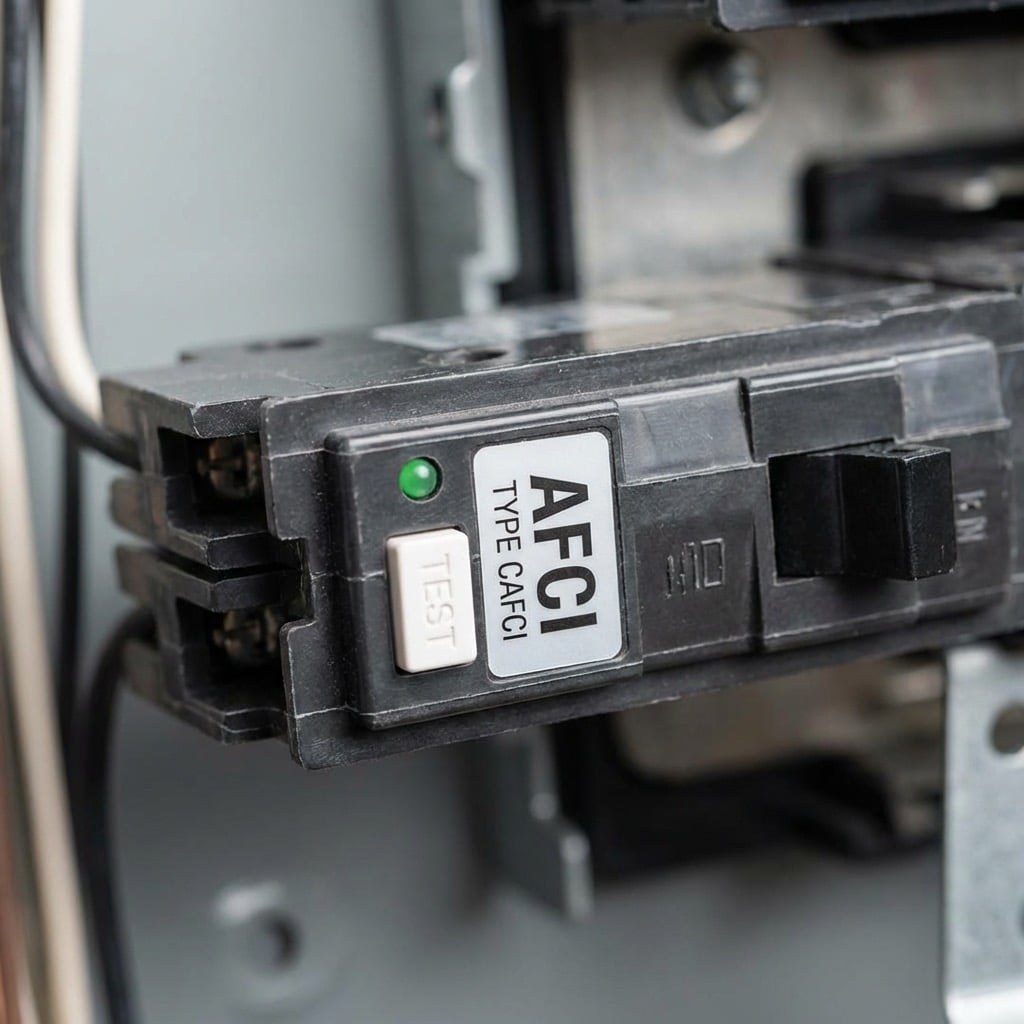 AFCI protection is commonly incorporated into breakers in the electrical panel. You’re much more likely to see extensive AFCI protection in newer construction than in an older Northern Ohio home.
If you’re touring a 100-year-old house in Cleveland or Toledo and don’t see a panel full of AFCI breakers, that fact by itself shouldn’t be surprising. This is one of those situations where the age of the house and electrical system matter.
Surge Protection: Protecting Electronics and Appliances
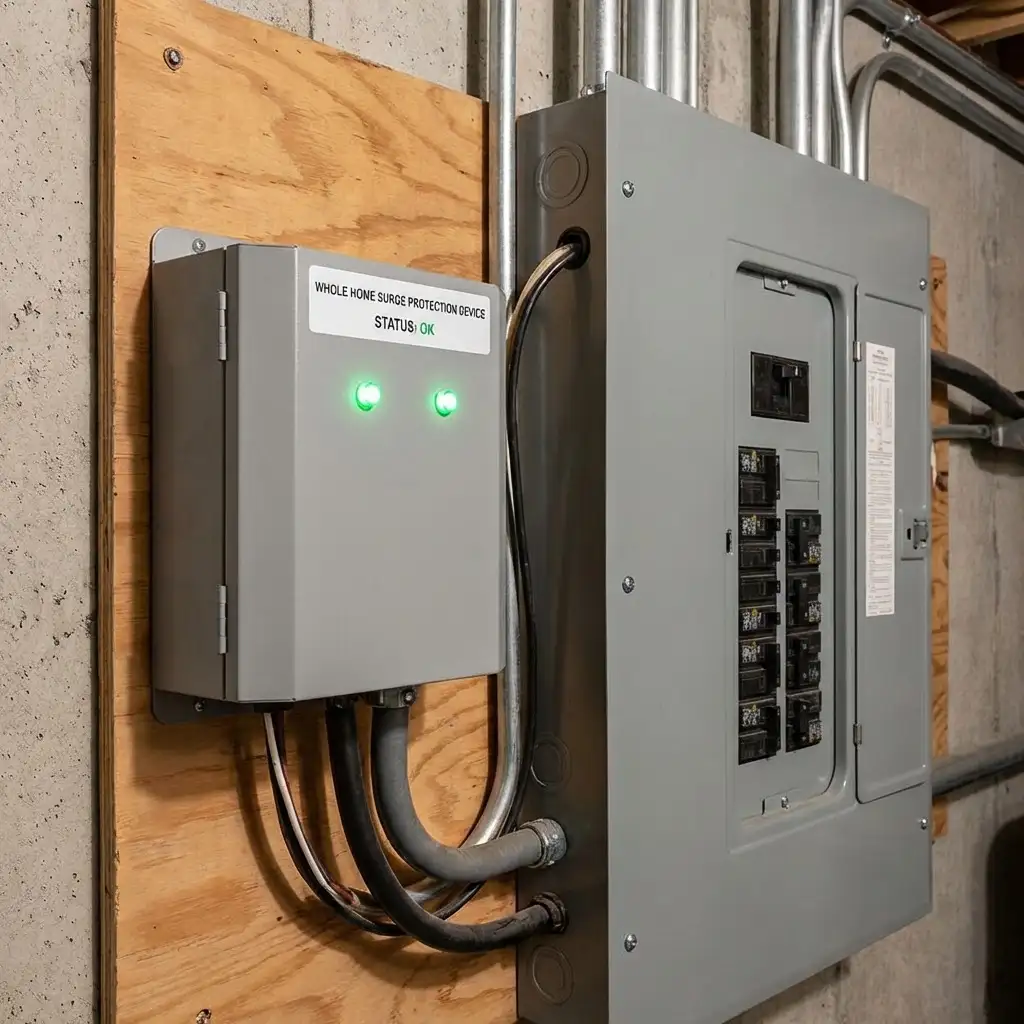 Surge protection serves another purpose entirely. A surge protector helps protect electrical equipment from sudden increases in voltage. These voltage spikes can come from the electrical utility, changes within the electrical system, or sometimes nearby lightning activity.
Surge protection generally comes in two forms: whole-home surge protection installed at the electrical panel and point-of-use surge protectors, such as quality surge-protection strips used for computers, televisions, and other electronics.
Surge protection has become increasingly valuable as our homes have filled with electronics. We’re no longer just talking about protecting a desktop computer. Modern homes can have expensive circuit boards and electronics in appliances, HVAC equipment, televisions, and smart-home devices.
Will a surge protector protect my house from lightning?
This is where we see a common misconception. Don’t think of a surge protector as a force field against a direct lightning strike.
Surge protection can help with voltage surges on the utility line and may offer protection from electrical disturbances associated with lightning in the area. However, if lightning directly strikes your house, you should not expect a standard whole-home or plug-in surge protector to guarantee that your electronics will be protected.
That’s an important distinction because people commonly hear “surge protector” and assume it means “lightning protection.” The better way to think about surge protection is that it primarily protects electronics and equipment from voltage spikes, not your entire home from a direct lightning strike. Also remember that surge protection relies on proper grounding to safely divert excess electrical energy.
GFCI vs. AFCI: The Easiest Way to Remember the Difference
If you only remember two things from this article, make them these: GFCI = shock protection, while AFCI = fire protection.
That’s obviously simplifying some fairly complicated electrical systems, but for a home buyer trying to understand an inspection report, it’s a useful way to keep the two straight. Surge protection is primarily about protecting equipment and electronics, while grounding provides a safer path for unwanted electrical current.
What If an Older House Doesn’t Have All of These?
This may be the most important part of the conversation for home buyers. Don’t expect every older house to have every modern electrical safety feature. Electrical standards have changed significantly over time, and the protections we use today were developed and adopted at different points.
As a general rule, grounded branch-circuit wiring became common in homes during the 1960s. GFCI protection began appearing in the 1970s and expanded considerably through the 1980s and 1990s. AFCI protection arrived much later, beginning primarily with bedroom circuits in the early 2000s before expanding to much of the home during the late 2000s and 2010s. Whole-home surge protection is newer still, becoming an NEC requirement for dwelling services beginning with the 2020 NEC. Because of this, a 1950s house may have ungrounded circuits, a 1980s house may have only limited GFCI protection, and even a home built in the early 2000s may have far less AFCI protection than a new home today. None of that automatically means the home is unsafe or that you shouldn’t buy it.
Instead, use the home inspection to understand what is there, what’s missing, and which improvements make sense for your particular house and circumstances. Some electrical upgrades can be relatively straightforward, while others can become much more involved depending on the age and configuration of the home’s wiring. That’s why context matters.
What We Recommend to Home Buyers
When we’re inspecting homes throughout Toledo, Sandusky, Cleveland, and the rest of Northern Ohio, our goal isn’t to convince buyers that an older house needs to be converted into a brand-new house. It’s to help them understand what they’re buying.
If an electrical safety feature is missing, we recommend looking at the bigger picture. What protection is missing? What risk was that device intended to reduce? How important is the upgrade in this particular location? What would be involved in adding it? Is this something that should be addressed immediately, or is it an improvement you can plan for over time?
Those are much more useful questions than simply asking whether an older house meets every electrical standard used in new construction today.
The Bottom Line
GFCIs, AFCIs, ground wires, and surge protectors all make our electrical systems safer, but they aren’t interchangeable. GFCIs protect people from electrical shock. Ground wires give stray electrical current a safer path. AFCIs help protect against electrical fires caused by arcing. Surge protection helps protect appliances and electronics from voltage spikes.
If you’re buying an older home and don’t have all four everywhere you’d expect them in a new house, don’t panic. That’s honestly the norm for most homeowners. Understand what the home has, understand what it doesn’t have, and use that information to decide which upgrades make sense for you.
That’s really what a home inspection is supposed to do. It should give you the information you need to make a better decision about the house—not simply a list of reasons to be afraid of an older home.

About the Author
Taylor Radloff : General Manager
Taylor oversees finance, accounting, marketing, and company strategy at Erie Inspection Service. Before joining Erie, he worked as a Multinational Banker at J.P. Morgan and brings a strong background in business operations and financial management.




Contact Us
Contact us for your home inspection today!
 800-434-6022