
What Does a Home Inspection NOT Cover in Ohio?
If you’re buying a home in Cleveland, Toledo, Sandusky, or anywhere in Northern Ohio, this is something worth understanding upfront: A home inspection does not cover everything. That’s not because inspectors are cutting corners. It’s because home inspections in Ohio are regulated by the State. We operate under the Standards of Practice set by the Ohio Division of Real Estate and Professional Licensing—just like real estate agents and appraisers. Those standards clearly define what we look at, what we report on, and what falls outside of that scope. And in our experience, that’s where most of the confusion comes from.
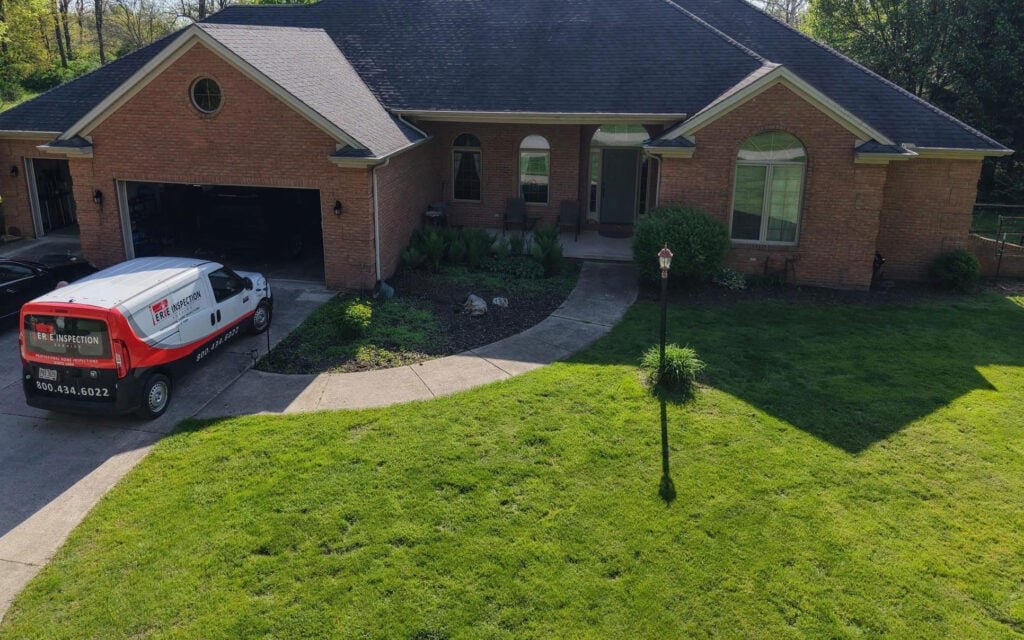
First—What a Home Inspection Actually Is
Before getting into what’s not included, it helps to understand what you’re actually paying for. A home inspection is an overview of the home. We evaluate the major systems—roof, electrical, plumbing, HVAC, foundation—and give you a clear picture of the home’s condition so you can make an informed decision. It’s also a visual inspection. We’re not opening walls or taking things apart. That said, we’re not just walking through with a flashlight either. We use tools like infrared cameras, moisture meters, and drones to help us see more than the average person would. Even with that, there are still limits.
A home inspection is also a snapshot in time. If we inspect a home in August and it hasn’t rained in weeks, moisture issues can be harder to detect. We look for signs of past problems, but we can’t simulate a heavy storm or predict exactly how a home will perform in every condition. At the end of the day, no inspection is perfect. We’re not going to find every issue—but a good inspection will dramatically reduce your risk. It gives you a roadmap for the home, helps you prioritize what matters, and prevents major surprises down the road.
What a Home Inspection Does NOT Cover
This is where expectations can get off track. There are real limitations, and they’re not random. In most cases, they fall into a few clear categories.
Specialty Systems
Some systems fall outside the scope of a standard inspection simply because they require specialized knowledge. This includes things like sprinkler systems, central vacuum systems, pools, hot tubs, saunas, security systems, and smart home features. We recently had a client ask why their central vacuum system wasn’t inspected. It’s a fair question—but it’s a perfect example of something that sits outside the standard scope. The reality is, a home inspector already needs to understand structure, roofing, electrical, plumbing, HVAC, and more. These additional systems require their own level of expertise. At a certain point, it makes more sense to bring in a specialist who focuses on that system.
Items That Require Additional Testing
This is one of the most important categories for buyers to understand. There are several items that are not included in a general home inspection, but can be tested separately if needed.
These include:
- Radon
- Sewer lines
- Termites (wood destroying insects)
- Mold
- Asbestos
- Chimney flues
Here’s where it gets a little nuanced. Even though these are excluded, we’re still looking for signs. If we see mold-like substance, we’re going to point it out. If we see materials that commonly contain asbestos, we’ll mention it. But confirming those issues requires specific testing, licensing, or equipment that goes beyond a general inspection.
Think of it this way: A home inspection gives you a strong overview, but additional testing is a separate decision based on your comfort level, the home, and your risk tolerance.
Limitations Due to Access and Reality
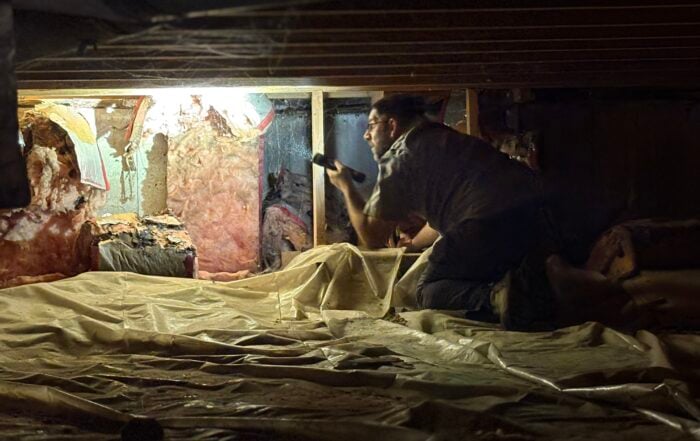
Some limitations are simply unavoidable. The biggest one is this: We can only inspect what we can see. There could be a slow plumbing leak behind a wall causing mold and damage. There could be issues inside a ceiling or under flooring. Even with tools like infrared cameras and moisture meters, we can only catch these problems sometimes—not always.
Finished basements are another good example. If the walls are fully covered, we can’t directly see the foundation. That doesn’t mean there’s a problem—but it does limit what we can evaluate. There’s always some level of unknown. The important part is to minimize it.
Why Do These Limitations Exist?
Part of it comes down to scope and practicality. But part of it is also liability. A typical home inspection might cost $400 to $600. At the same time, some home issues can cost tens of thousands—or even hundreds of thousands—of dollars to fix. There has to be a reasonable boundary. Otherwise, the model becomes: earn $500 and be liable for $500,000. That’s not realistic, and it’s one of the reasons the Standards of Practice exist in the first place.
That said, many inspectors (including us) carry Errors & Omissions insurance, which provides an added layer of protection if something major is missed due to negligence.
The Most Expensive Things Buyers Overlook
This is where understanding the limitations really matters. In our experience, the biggest issues aren’t the things we can see—they’re the things we can’t.
Sewer Line Issues
This is one of the biggest ones we see in Northern Ohio, especially with older homes. The sewer line runs underground from the house to the street. During a standard inspection, we can run water and check for backups, but we cannot actually see inside the pipe. Common issues include tree roots, collapses, and blockages. Repairs can easily run $5,000 to $15,000 or more. A sewer scope uses a camera to inspect the line and gives a much clearer picture of what’s going on.
Hidden Moisture Behind Walls
Moisture is one of the biggest enemies in a home. There could be a slow leak behind a wall that has been there for months or even years. That can lead to mold, rot, and structural damage. We use tools like infrared cameras and moisture meters to help identify these issues—but they are not foolproof. Sometimes we find them, sometimes we don’t.
Chimney Flue Problems
We inspect the visible portions of a chimney, including the firebox and exterior components like the cap and crown. What we can’t see is the inside of the flue. That’s where problems can exist, and repairs can be expensive. A chimney scope, which uses a camera similar to a sewer scope, is the only way to fully evaluate that area.
So What Should You Do?
This is where buyers can get overwhelmed. Our approach is simple—we don’t recommend everything. We give you the information and help you decide what makes sense for your situation. A few things we look at:
Age of the Home
If a home was built before 1980, a sewer scope is a very good idea. Older homes often have clay pipes that are more prone to failure. Even newer homes can have issues, but the risk is typically higher with age.
Location
Ohio is consistently ranked as a top 5 state for radon. That means testing is almost always a smart decision, whether you do it during the inspection or after you move in. Termites and other wood destroying insects are also present in our area. In some cases, these inspections are required depending on the loan type.
What We See During the Inspection
We’re always looking for clues. Things like moisture concerns, drainage issues, or structural signs can point us toward recommending additional evaluations. Every home is different, and the recommendations should reflect that.
The Bottom Line
- Home inspections in Ohio follow a defined state standard
- They are visual, limited, and a snapshot in time
- There are clear exclusions—and they exist for valid reasons
- While home inspections don’t completely eliminate risk, they significantly reduce it
- Additional inspections can significantly reduce those risks
At the end of the day, a home inspection isn’t about finding everything. It’s about helping you understand the home you’re buying.

About the Author
Taylor Radloff : General Manager
Taylor oversees finance, accounting, marketing, and company strategy at Erie Inspection Service. Before joining Erie, he worked as a Multinational Banker at J.P. Morgan and brings a strong background in business operations and financial management.

Contact Us
Contact us for your home inspection today!
 800-434-6022